One-stop Solution for Wire and Cable
Email:info@qingzhou-cable.com
WhatsApp/WeChat/Skype/Phone:+8618625503172

WhatsApp/WeChat/Skype/Phone:+8618625503172

 Email:
info@qingzhou-cable.com
Email:
info@qingzhou-cable.com
 Tel:
+8618625503172
Tel:
+8618625503172
 Fax:
+8618625503172
Fax:
+8618625503172
 Skype:
+8618625503172
Skype:
+8618625503172
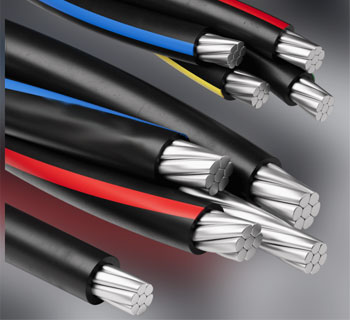
ABC, SIP-4 (СИП-4)
SAX, SIP-3 (СИП-3)
AXKA, SIP-2 (СИП-2)
AMKA, SIP-1 (СИП-1)
Application area
SIP (self-supporting insulated wire) is a type of wire designed for the transmission and distribution of electrical energy in overhead power and lighting networks with a nominal voltage of up to 0.6/1 kV inclusive. It is also used for protected wires of overhead power lines with a nominal voltage of 20 kV (for networks with voltages of 10, 15, and 20 kV) and 35 kV (for networks with a voltage of 35 kV) with a nominal frequency of 50 Hz.
1. Conductor:
Aluminium conductor, round stranded compressed (RM)
2. Insulation:
XLPE compound, UV-resistant
Stranding:
Around a load-bearing element of high traction resistance that can be made of aluminum or aluminum alloy. One, two or three conductors for phase, being able to carry one or two additional conductors for public lighting.
DESCRIPTION
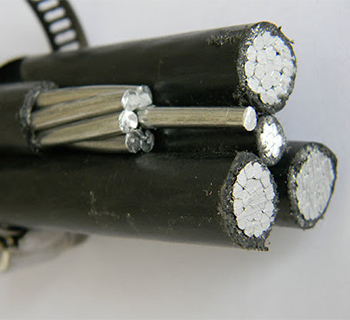
Self-supporting isolated and projected cable
SIP-1 AMKA (Finland)
Self-supporting wire with aluminum conductors, insulated from light-stabilized cross-linked polyethylene, with zero bearing insulated aluminum alloy conductor. Wires with a zero carrier core of 50 mm2 or more can be made with one, two or three auxiliary cores. Nominal cross section of auxiliary conductors for outdoor lighting circuits 16, 25 or 35 mm2, for control circuits 1.5; 2.5 or 4 mm2. Lighting conductors with a cross section of 16 mm2 only stranded
SIP-2 Torsada (France)
Self-supporting wire with aluminum conductors, insulated from light-stabilized cross-linked PE, with zero load-bearing insulated aluminum alloy conductor
SIP-3 SAX (Finland) PAS-W (Poland)
Protected self-supporting wire with a conductive core made of aluminum alloy, with protective insulation made of light-stabilized cross-linked PE
SIP-4, SIP-5 ALUS, EX Four Core (Sweden), AsXsn (Poland)
Self-supporting insulated wire without bearing element, with aluminum conductors with light-stabilized cross-linked PE insulation. Stranded conductors with a cross section of 16 mm2 (SIP-4) or a cross section of 16 to 150 mm2 (SIP-5). Conductors with a cross section of 16 mm2 for SIP-5 can be seamless
Advantages of SIP wires:
1. High reliability and safety:
– XLPE does not form electrical or chemical bonds with contacting substances, unlike, for example, PVC.
– Wet snow does not stick to XLPE insulation, it is not affected by ice buildup – no “wire overgrowth” in winter, no breaks.
– Reduces the statistics of electric shock incidents during installation, repair, and operation of the line due to the presence of XLPE insulation (unlike A and AC wires).
– Possibility of installation in urban environments due to the presence of insulation.
2. Reduced installation costs:
– Overhead lines with SIP do not require wide clearings in forest areas.
– Shorter poles are used, eliminating the need for insulators and expensive crossarms.
– Possibility of laying SIP along building facades, as well as joint suspension with low and high voltage wires, and communication lines.
3. Reduction of operating and maintenance costs by up to 80%:
– No costs for periodic clearing of clearings, unlike A and AC wires.
– Reduction of energy losses due to more than threefold decrease in reactive resistance.
– Lower probability of unauthorized connections.
– New subscribers can be connected without disconnecting others.
– Higher reliability – reducing repair and maintenance expenses.
Wire classification
By voltage level:
– Low voltage 0.6-1.0 kV – SIP-1, SIP-1A, SIP-2, SIP-2A, SIP-4, SIP-5
– Medium voltage 10-35 kV – SIP-3
By number of conductors:
– Multicore (up to 6 cores) – SIP-1, SIP-1A, SIP-2, SIP-2A, SIP-4, SIP-5
– Single-core – SIP-3
By construction:
– With a supporting conductor – SIP-1, SIP-1A, SIP-2, SIP-2A
– Without a supporting conductor – SIP-3, SIP-4, SIP-5
SIP-1 – self-supporting insulated wire with aluminum conductive cores, insulated with light-stabilized thermoplastic polyethylene, with a neutral supporting uninsulated conductor made of compacted aluminum wire reinforced with steel wire or aluminum alloy.
SIP-1A – similar to SIP-1 but with a neutral supporting conductor insulated with light-stabilized thermoplastic polyethylene. SIP-1 and SIP-1A wires are used for overhead power lines and branches to residential buildings and outbuildings in areas with moderate and cold climates, in air atmospheres of types II and III according to GOST 15150.
SIP-2 – self-supporting insulated wire with aluminum conductive cores, insulated with light-stabilized cross-linked polyethylene, with a neutral supporting uninsulated conductor made of compacted aluminum wire reinforced with steel wire or aluminum alloy.
SIP-2A – similar to SIP-2 but with a neutral supporting conductor insulated with light-stabilized cross-linked polyethylene. SIP-2 and SIP-2A wires are used for overhead power lines and branches to residential buildings and outbuildings in areas with moderate and cold climates, in air atmospheres of types II and III according to GOST 15150.
SIP-3 – self-supporting protected wire with a conductive core made of aluminum alloy, with protective insulation made of light-stabilized cross-linked polyethylene. It is used for overhead power lines with a nominal voltage of 10-35 kV in air atmospheres of types II and III according to GOST 15150, including coastal areas, salt lakes, industrial zones, and regions with saline sands.
SIP-4 – self-supporting insulated wire without a supporting element, with aluminum conductive cores, insulated with light-stabilized thermoplastic polyethylene. It is used for overhead power lines and branches to residential buildings and outbuildings in areas with moderate and cold climates, in air atmospheres of types II and III according to GOST 15150.
SIP-5 – self-supporting insulated wire without a supporting element, with aluminum conductive cores, insulated with light-stabilized cross-linked polyethylene. It is used for overhead power lines and branches to residential buildings and outbuildings in areas with moderate and cold climates, in air atmospheres of types II and III according to GOST 15150.
Wires of the SIP-1, SIP-1A, SIP-2, and SIP-2A brands with a neutral supporting conductor and a core cross-section of 50 mm² or more can be manufactured with 1, 2, or 3 auxiliary conductors. The nominal cross-section of auxiliary conductors for outdoor lighting circuits is 16 mm², 25 mm², or 35 mm², and for control circuits – 1.5 mm², 2.5 mm², or 4 mm².
Wires with a nominal voltage of 0.6/1 kV are manufactured as multicore, while wires with a nominal voltage of 20 and 35 kV are single-core. The main and auxiliary conductive cores for lighting circuits are stranded from round aluminum wires, have a round shape, and are compacted. The auxiliary cores for control circuits are single-wire copper and comply with GOST 22483.
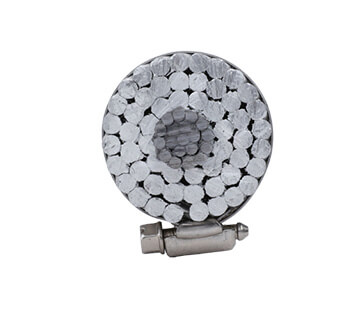
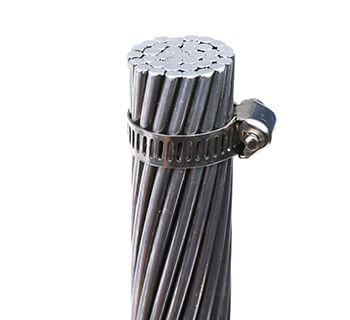
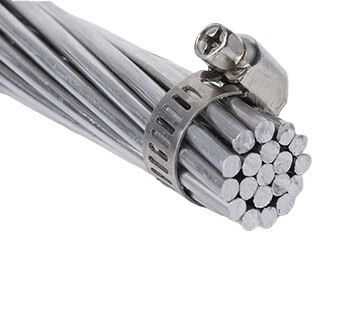
The neutral supporting conductor of the wires is stranded from compacted aluminum wire reinforced with steel wire or made of aluminum alloy.
The marking of wire cores complies with the requirements of GOST 18690 and features distinctive identification in the form of color stripes.
*Describe Your Buying Requirements in Detail